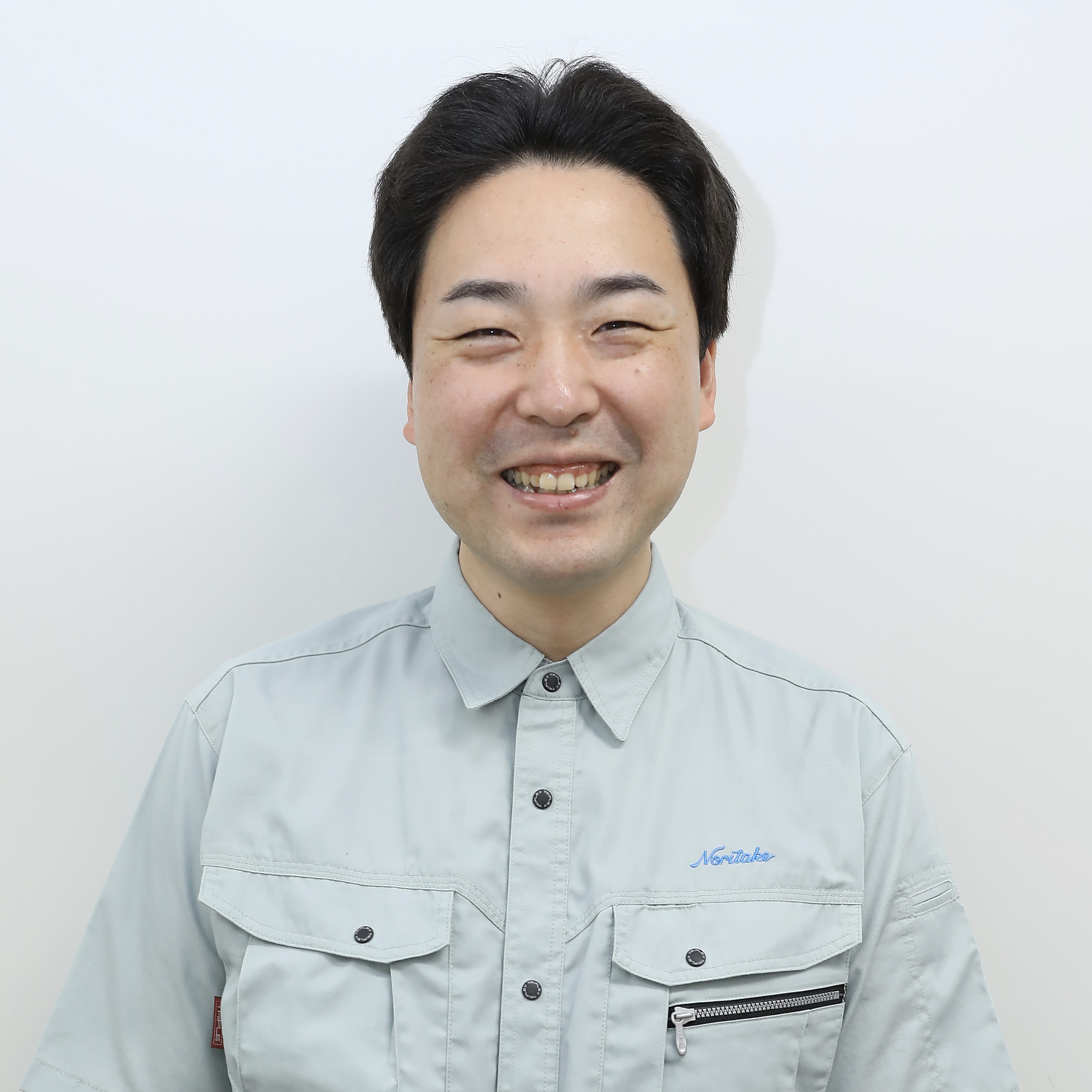
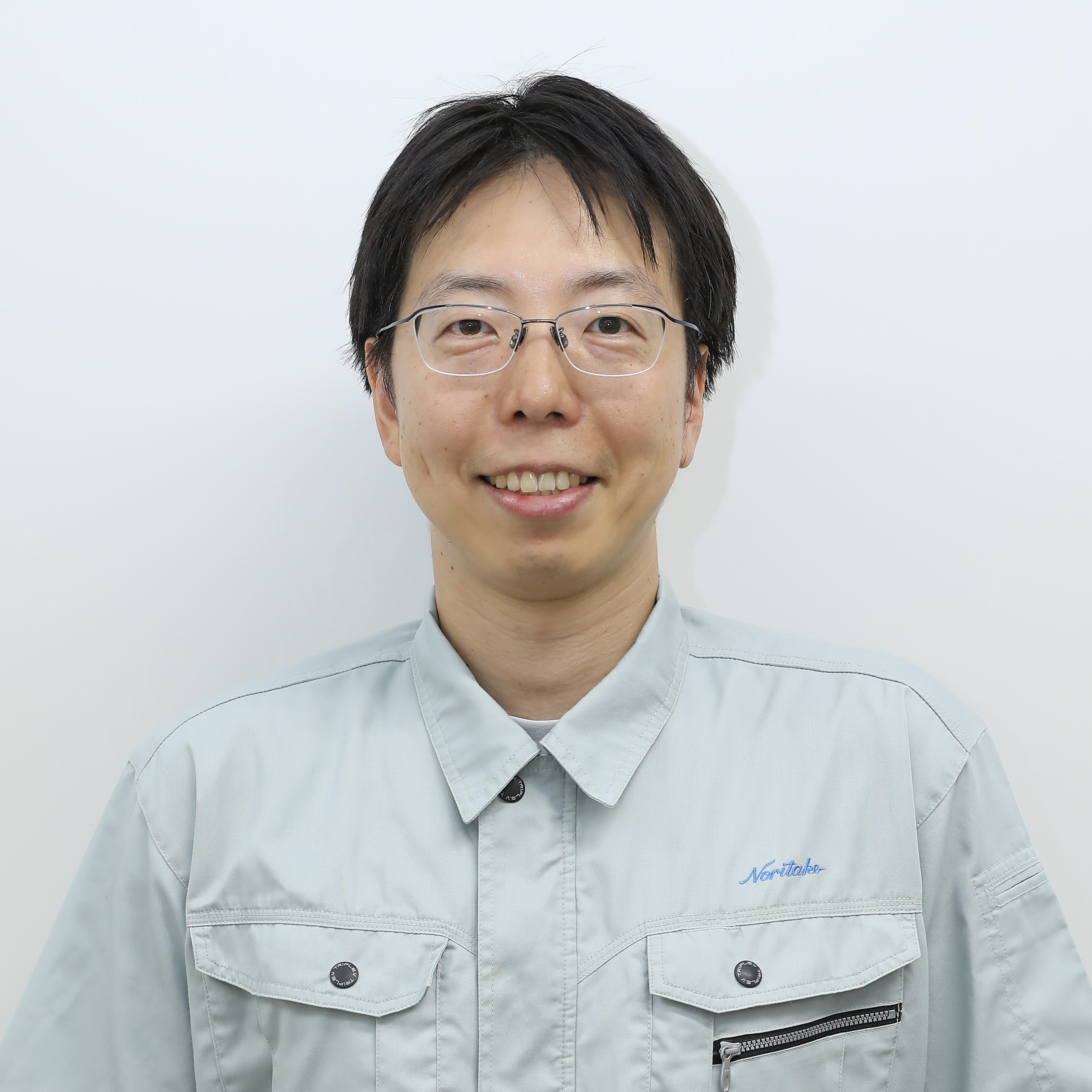
With more than 120 years of history, NORITAKE CO., LIMITEDis internationally recognised as a leading ceramics manufacturer. Guided by the principle of "contributing to society through our business," the company draws on its proprietary technologies — refined over decades — to deliver products and technologies across a wide range of fields, from tableware to advanced technology and core industries. Around 2020, NORITAKE began evaluating the adoption of Materials Informatics (MI), and in 2023 the company introduced miHub®. We spoke with Yuki Yamada of the R&D Center and Masaya Morita of the Industrial Products Group about the background to that decision and their outlook for the future.
Developing New Materials for Increasingly Sophisticated Customer Needs
To begin, could you give us an overview of your business?
NORITAKE started out making tableware, and we've diversified by applying and extending the technologies we developed there. In our founding days, tableware production required grinding wheels, high-quality raw materials, and firing kilns. Producing these in-house gave rise to new businesses — Industrial Equipment, Ceramic Materials, and Engineering. Together with our original tableware business, these are the four businesses we operate today.
Our strength as a ceramics manufacturer able to adapt to changing times lies in our long-accumulated ceramics expertise and the breadth of our business, which spans everything from materials to equipment. Our main markets used to be automotive and steel-related industries, but to align our business with current needs, we have now identified three new growth areas: the environment, electronics, and well-being.
The R&D Center I belong to is an organisation that sits outside any specific business unit; our role is to advance our foundational technologies and create new technologies and products. The team I lead has been particularly active in adopting MI, and we play a central coordinating role with MI-6 — across our internal business units and with outside partners. I personally work on glass material development. NORITAKE's glass technology started with tableware glazes and has since become a key material that determines the performance of a wide range of products, including grinding wheels and dental materials. It rarely sits in the spotlight — it's more of a behind-the-scenes player — but it's a critically important material that underpins the differentiation of our products.
I'm in the Industrial Products Group, where I lead the DX team. Rather than specialising in one niche, our business covers the full breadth of grinding and polishing — every application area — and our strength lies in that breadth, combined with the depth of data and know-how we've built up over a long history.
My team's role is to put those accumulated strengths to work and accelerate the business. By solving DX challenges across the division and putting the underlying infrastructure in place, we help the business adapt to change and grow.
Could you tell us about the development trends in glass and grinding-wheel materials, and what led you to start considering MI?
In recent years, the rapid progress of EVs and electrification has made the functionality our customers demand both more sophisticated and more complex. The specialised glass bonding materials I develop are one example of products built to meet those needs.
In applications such as EV components, where large currents flow and temperatures become extremely high, bonding materials also need strong heat resistance. Conventional resin-based bonding materials, however, degrade when exposed to heat. Switching to glass — an inorganic material — solves this problem of bonding at high temperatures.
At the same time, to address a wider range of applications, there is growing demand for bonding at lower temperatures than conventional glass bonding materials allow — around 300 to 350°C. This kind of work requires materials with entirely new properties, and the development frontier itself keeps expanding.
We face similar challenges in grinding wheels. The job of a grinding wheel is to remove material and produce a smooth surface, but the recent trend is towards higher precision finishes than ever before. The market for grinding and polishing in semiconductor applications, in particular, is growing — and because the materials involved are fine and hard, the precision required is on an entirely different level from metal processing. That makes development significantly harder.
On top of that, the market was pressing us for faster development, which raised the practical question of how to free up development resources. Facing both of these challenges, we had a real sense that the traditional approach — relying on the long experience and intuition of a single developer — could no longer keep up. The realisation that a new development approach like MI would be essential to deliver high-quality products faster was what prompted us to start looking at MI.

Choosing miHub for Its Usability and Trusted Support
Could you walk us through how you came to adopt miHub® and what tipped the decision in its favour?
Before I was involved, internal discussions about adopting MI started around 2020 to 2021. As I understand it, a study group was first set up in the R&D Center, and while trialling several services they came across MI-6 and reached out to them.
Ultimately, weighing the views of the members who'd been on it from the start against what the MI-6 team explained, we concluded that miHub was the best fit for NORITAKE and decided to adopt it. The careful, up-front explanation eased our anxiety about stepping into the unfamiliar territory of MI, and our confidence in their thorough support structure was another major factor.
Because MI works by iterating through experiments to converge on an answer, we felt it was important that developers themselves — not just specialists — could use the tool hands-on. So one of our criteria was "good usability" — something that could be used intuitively without programming knowledge. On that front, miHub®, with its easy-to-use web interface, was exactly what we were looking for.
Did your own past experience and sense of the issues also feed into that decision?
Yes. Over more than ten years developing glass materials, shortening development cycles and reducing the dependence on individual know-how have been long-running issues for me, and I'd always seen potential in MI. That said — at the risk of sounding contradictory — I'm the kind of engineer who puts a lot of weight on hands-on experiments and experience, and honestly I'd always felt out of my depth with data analysis. So at first I just watched from a distance, thinking, "They're doing something new over there," without really getting involved. But the sense that experience alone was hitting its limits kept growing, and I was acutely aware that we needed a new approach.
My path was different from Yamada's. I wanted to bring MI into our development work, and I'd started teaching myself. Early on I was running code straight out of books, but I got the sense that with some basic programming knowledge you could get started, and from building and testing my own in-house programs I took away two strong impressions.
The first was the strong potential of MI in materials for which standard databases already exist. The second was just how difficult it is to drive MI adoption inside a company.
When there isn't enough data for the AI to analyse, momentum stalls early on, and if you can't meet the high expectations of the people running the experiments — who tend to assume "AI should just give us the answer" — the tool quickly gets written off as unusable. Closing that gap, I came to feel strongly, is the big challenge to getting MI adopted internally. It was against that backdrop that I came across miHub®, which developers themselves can use directly. Having struggled with the self-taught route, I found that its concept of being intuitive and frictionless to use lined up exactly with my own thinking about the problem.
We were both grappling with our own challenges, and the trigger was Morita — who I'd known for some time — saying, "Why don't we give this a try together?" On my own I couldn't really picture how the data analysis would work, but I figured that if we combined his expertise in MI with my materials knowledge and data, we might be able to do something interesting.
What also pushed me to commit was thinking, "If it's a tool anyone can use intuitively, then even someone like me who's never been comfortable with data analysis might be able to give it a shot." Morita and I agreed the first step was to hear MI-6 out in detail.
At that point I wanted to spread MI within my own division first, but I was hitting the limits of what one person could push on alone. While I was exploring how to use miHub®, it felt as though a strong ally who shared the same conviction had stepped forward.
Development Time Cut by More Than Half — Hitting a Goal We'd Nearly Given Up On
How did you actually go about implementing MI?
On the glass-material theme, we had hopes of creating new materials and shortening development cycles, but rather than setting the bar too high from day one, we went in thinking, "Let's just start by validating whether MI actually works."
From what Morita had told me, I had a hunch that glass and MI would be a good match. As it happened, our work on a low-temperature glass bonding material had stalled at exactly that point, and honestly we were close to giving up. We'd brought the bonding temperature down from around 500°C to 400°C through a series of prototypes, but the target was lower still, and we'd run out of ideas.
So we decided to try MI on this theme, with the hope that something interesting might come of it. The result was astonishing: we hit the target in the very first round of trials. I'd been half-sceptical going in, so I was simply blown away. I remember turning to my junior colleague on the project and just saying, "This is incredible."
I reported it to my manager, and we carefully checked whether the properties were reproducible — not just a lucky one-off. They were. Concretely, a target we hadn't been able to hit in a full year was reached in about six months. That's a more than 50% reduction in development time.
What do you think drove that dramatic result?
I see two foundations behind this success. One was the high-quality internal data NORITAKE has built up over many years; the other was setting the right analysis conditions. Glass is used in many of our products, starting with our original tableware business, so we already had a solid internal database on glass — we just hadn't been making full use of it. With guidance from MI-6, we set analysis conditions that drew on our engineers' know-how, and that's when MI as a method really brought out the latent value that had been sitting dormant.
That experience completely dispelled my own anxieties about MI. And as a welcome side effect, the tangible result sparked a "let me try it too" attitude in other members of the development team — making it clear to me that MI also helps develop people.
From my own experience with MI, I've come to believe that a certain amount of trial and error is unavoidable if you want to produce results. So I see iterating through that trial and error while using MI as a key part of the work itself.
This project turned that assumption on its head — in a good way. Even though we were still in the early stages of trial and error, we started to see results that were clearer than we'd expected. It reinforced my sense of MI's potential, and seeing a credible path to steady, repeatable results was a real boost.
That first success only meant we'd cleared an interim target, but its impact was enormous. From there we reset our goals and started running a full MI cycle with commercialisation in mind.
*Related news release: https://www.noritake.co.jp/news/detail/620/

Scaling MI Across the Organisation by Building and Sharing Internal Wins
Finally, could you share your outlook for the future and what you hope to see from MI-6?
I see our current phase as building up concrete MI success stories one by one, across each business and function. We identify where MI can be applied to a given problem, build a track record through technical support, and then actively share those success stories internally. As a result, knowledge-sharing across divisions has already started. As key people deepen their MI expertise, we're starting to see decisions being made based on MI analysis. I'd like to accelerate that momentum further.
Building on what Yamada said — my basic view of MI is that it only really pays off when practitioners, not just specialists, can use it well. For broad adoption, a no-code, web-based tool drops the barrier to entry significantly. That's exactly what miHub® offers.
In practice, miHub®'s accessibility for anyone served as a catalyst. It sparked active discussion in my division about how to accumulate data in a usable form, and a culture of "storing data in ways we can actually use" is steadily taking hold.
Rolling out MI internally is an extremely important initiative for differentiating the company. But we shouldn't forget that MI is ultimately a tool — our purpose is to turn new products and technologies that benefit society into business results. There are still sceptical voices internally, and some misunderstandings of the "MI alone will do it" variety, so we need to keep up a patient dialogue. The message we need to get across is that MI doesn't replace existing technology and experience; it shows its real value when combined with them.
My own experience bears that out. When we take a new glass material developed with MI and then put our existing techniques to work on it, we sometimes find interesting properties that MI alone could never have revealed.
Put another way, MI is a powerful tool for finding the gold vein. The real value only comes when we dig deeper from there with the techniques and know-how we've built up over the years. With that mindset, I want us to combine MI with our existing technology — without becoming fixated on MI itself — and create genuinely high-value products across the company.
AI-related technology is evolving at a remarkable pace, and I think the knowledge gap between specialists — and others who actively keep up — and the rest will only widen, faster and faster. Falling behind that curve translates directly into a loss of corporate competitiveness, so we want MI-6 to keep walking alongside us as the partner who helps us close that gap.
What's especially reassuring is that the people we work with at MI-6 come from chemical-manufacturer backgrounds and share our challenges from the same user perspective. With MI, you can get started on your own from a book, but actually producing results is genuinely hard. I feel the MI-6 team really understands that practical difficulty as their own and empathises with it.
Having continued to use it, I'm convinced that two things fit NORITAKE especially well: our team can run the analysis without writing code, and MI-6 tailors their support to our skill level.
I also feel MI embodies the saying "failure is the foundation of success." Failed experiments can still be used as valuable data, and the approach actively encourages a "let's just try it" attitude. That clarity boosts researchers' motivation and, I think, ties in with reforming how people find meaning in their work. For that reason I'd like senior management to actively support this from a talent-development standpoint as well.
Above all, by connecting the proprietary technology and data NORITAKE has accumulated over more than 120 years with new approaches like MI and DX, we aim to further raise the value of our products in the environment, electronics, and well-being fields we are focused on. To make that happen, having MI-6's long-term support would mean a great deal to us.

Thank you very much to the team at NORITAKE CO., LIMITED for generously sharing their time and insights.
*Note: The content of this interview is current as of August 28, 2025.
You can download more details about miHub®, our SaaS-based Design of Experiments (DoE) platform, for free from the link below.
Click here to request information on miHub®
For any other inquiries regarding Materials Informatics (MI), please feel free to contact us at the email address below.
Business Development Department, MI-6 Ltd. bd@mi-6.co.jp