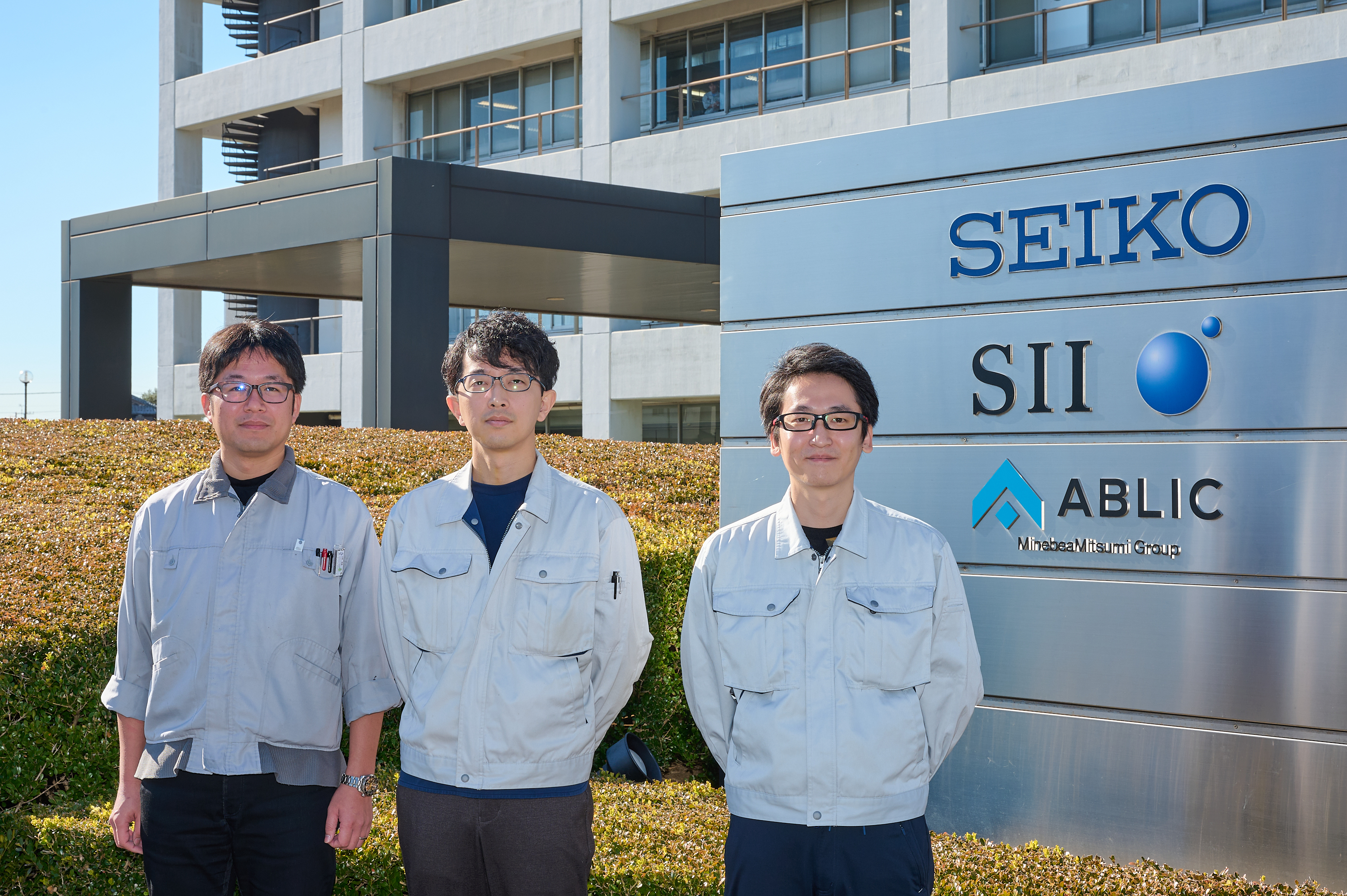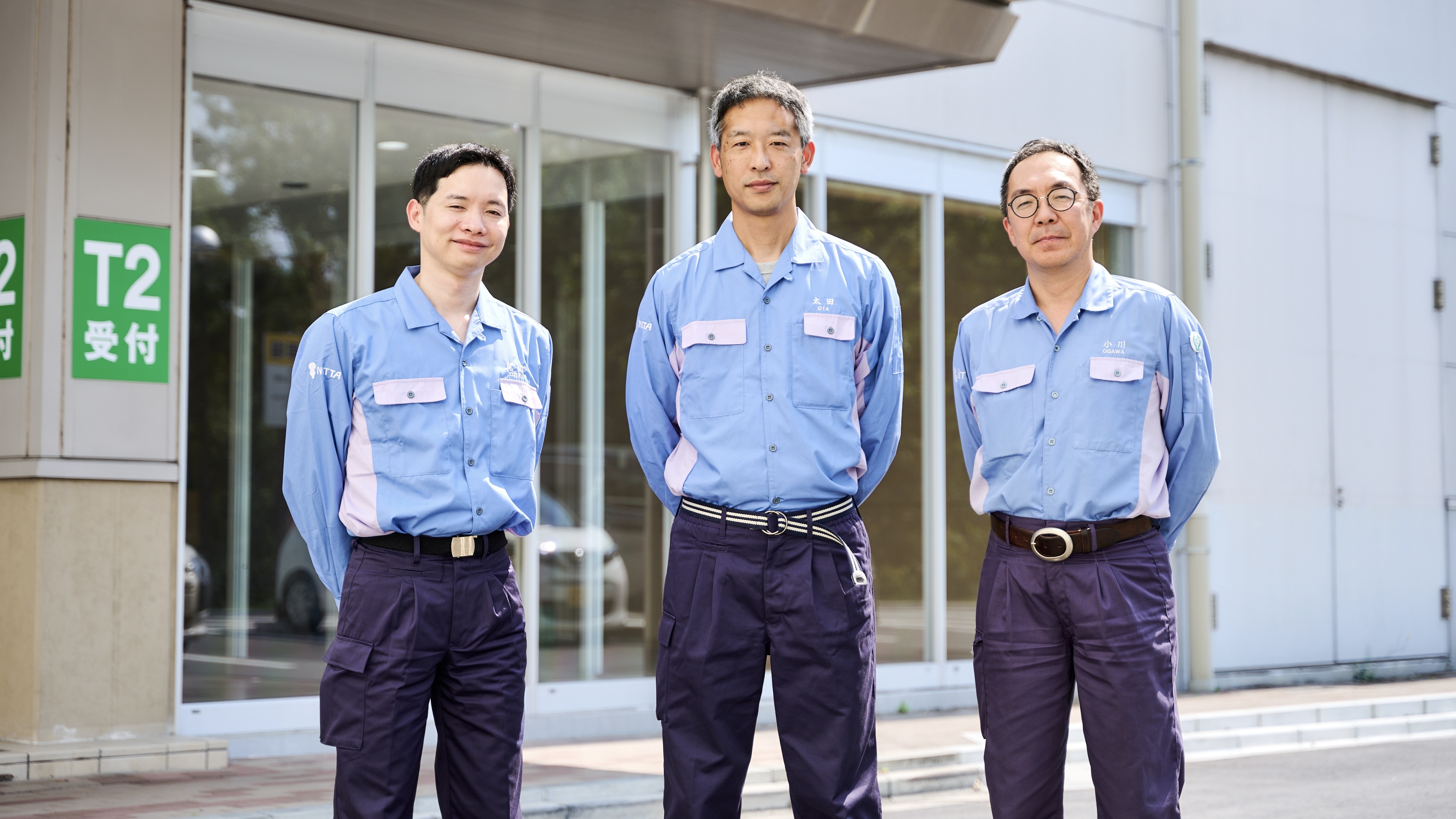
Dexerials Corporation develops, manufactures, and sells functional materials that are essential to electronics such as smartphones and laptops, and to today's increasingly electrified automobiles. Drawing on proprietary technology and know-how, the company supplies advanced materials including anisotropic conductive film (ACF), anti-reflective film, and optically clear resin (SVR), helping to drive the evolution of digital technology. The company's Optical Solutions Business Unit began evaluating Materials Informatics (MI) in 2023 and adopted miHub® that same year. We spoke with Yoshiro Takada of the Optical Solutions Business Unit about the background to that decision and where the work is heading next.
Faster Development Becomes Urgent as Digital Technology and Customer Demands Advance
Could you start by introducing your company and the Optical Solutions Business Unit?
Dexerials Corporation is a chemicals manufacturer that develops, produces, and sells functional materials essential to electronic devices and digital products such as smartphones. Founded in 1962 (formerly Sony Chemicals Corporation), the company is built on more than 60 years of proprietary technology. We develop products that improve the safety, visibility, and performance of electronic equipment, supplying tailored functional-materials solutions to customers worldwide — and several of our products hold the leading global market share in their category.
The Optical Solutions Business Unit where I work, focuses on developing functional materials that enable higher resolution and greater precision in displays and optical devices. We don't just supply materials — we provide complete optical solutions.
What prompted you to consider adopting MI, and what was the background?
Digital devices and digital technologies are evolving fast, and new products are reaching the market in rapid succession. Materials manufacturers like us are now under strong pressure to develop faster, and the specifications expected of our materials are getting tougher and more complex. We have to keep delivering high-quality, differentiated materials at speed, and we recognised that conventional development methods alone would not get us there. Making the development process more efficient and less dependent on individual expertise had become urgent.
To contribute to a sustainable society, we first have to transform our own management and business foundations into something that can grow sustainably. Digitalisation was identified as one of the key initiatives for getting there. In 2020 we established a Digital Transformation Department to oversee company-wide digitalisation and DX, and we've been driving DX across the organisation ever since. The shared view across the company is that digital technology is essential to making existing operations more efficient, reducing reliance on individuals, and building a more stable business foundation.
In the Optical Solutions Business Unit too, timely delivery is essential if we want customers to keep choosing us, and global development competition has intensified in recent years. Manufacturers in China and elsewhere are developing on completely different timelines, with very different assumptions about engineering effort, while in Japan work-style reforms have put limits on the hours we can spend on R&D. We felt a strong risk that continuing to rely on manual work and individual experience would leave us unable to meet increasingly demanding requirements. Improving development efficiency became one of our top priorities, and within the development cycle we first focused on the thinking and desk-work parts — experiment planning and results analysis. We saw MI as one effective way to make that area more efficient, and we began evaluating it.
Overcoming Resistance on the Ground: Shared Goals and Frontline-Focused Support Drive MI Adoption

Was there a personal motivation or formative experience behind your focus on driving MI forward?
For the first ten years of my career I poured myself into product development, but I came up against the reality that the work you've put your time and energy into — work you're genuinely proud of — doesn't always make it to mass production. I really love product development, and I'd always dreamed of seeing something I'd worked on go out into the world and be valued by customers. But you can rack your brain day after day and still not produce something good, and even when you do, there are plenty of reasons — cost, comparisons with competitors — why a customer might not adopt it.
That experience left me with a strong conviction about the next generation of researchers: I want younger researchers to be able to draw on the experiences and failures of those who came before them as data and know-how, so they don't have to repeat the same mistakes. And I want each individual researcher to be able to bring their full creativity to bear in a lab where the data is properly managed.
Convinced that digital and data capabilities were essential to making R&D more efficient and more advanced, I saw AI and MI as effective approaches, and with the establishment of the Digital Transformation Department and the broader DX push behind me, I kept making the case for MI internally. The result was the launch of a team dedicated to R&D DX and MI, with me as its leader.
What was the deciding factor in choosing miHub®?
What we wanted was a tool that the developers running experiments every day could pick up easily to accelerate their own work. On that score, miHub® stood out for its simplicity and clarity. In selecting an MI tool, our first priority was the frontline developer, and we focused on three things: (1) formulation prediction with inverse analysis capability, (2) easy to use without specialist expertise, and (3) easy to start with even when you have only a small amount of data. Because a developer's core job is to find compositions and process conditions that meet target physical properties, inverse analysis — which maps directly to that work — was high priority. We also knew that a tool packed with features no one can actually use is pointless, so we wanted something matched to the user's skill level and role. miHub®'s UI is intuitive and clear, so people don't get lost in the interface, and we judged it accessible to developers without a strong background in statistics or machine learning.
miHub® also fit our need to move quickly — to try things with limited data and get to a practical evaluation early. We concluded it was the right tool for our frontline developers and decided to proceed with a proof of concept (PoC) using miHub®.
Were there difficulties in the process of adopting MI?
AI and data weren't familiar territory for the development teams on the ground, so there was some resistance at the start. On top of that, our own promotion team had no prior MI experience, and we quickly learned that MI isn't a magic wand — without trial and error on the human side, deciding what to have the AI do and how to tie it back to real experiments, you don't get results. Even so, we felt MI's potential to accelerate research, and we believed the trial and error was well worth the effort.
So we started by setting shared goals with the product development teams and clarifying how the MI tool would contribute to reaching them — a way to build understanding and buy-in on the ground. We positioned MI explicitly as a means to an end, ran learning sessions within the team, and communicated internally in parallel, putting the foundations for MI adoption in place.
So you've worked hard to stay close to the issues on the ground while keeping MI's potential in view.
During the PoC phase, we made a point of providing support that stayed close to the teams on the ground, so that things like topic selection and experimental workload wouldn't be barriers to taking part. For example, we'd actively suggest topics — "How about trying this one?" — or open up options that required no additional experiments, like "Let's start with analysis you can do on the data you already have." Beyond that, the MI promotion team flexed to whatever was needed: cleaning up data, setting up the MI analysis, running readouts on PoC results. Every member of our team had product development experience of their own, and we put that to work in support that was grounded in what the front line actually faces.
What we learned from this is that MI is obviously not a silver bullet — but used well, it becomes a powerful tool — and that communication with stakeholders, anchored in a clear goal, is what really makes MI succeed.
PoC Results and Expert Support Raise MI's Profile and Spread a Data-Driven Mindset

What results from adopting miHub®, or changes inside the company, have you seen first-hand?
The PoC gave us concrete results and organisational change at the same time. The promotion team itself took the lead on a validation exercise — reproducing a previously developed product using miHub® — and a project that had originally taken two years was completed in just two months, a dramatic reduction in development time. This wasn't directly tied to new product development, but it was hugely valuable in helping the promotion team itself develop a deep understanding of how MI works, what it can and can't do, and its trade-offs. At the same time, it brought home a sharp competitive realisation: this is technology anyone can pick up, and we have to be using it. That sense of urgency wasn't just anxiety — it became positive motivation: we, too, need to take full advantage of this powerful tool.
Successful AI-driven formulation prediction is another result. We've had cases where prototypes built using formulation conditions proposed by the AI actually hit the target performance. In parallel, developers' awareness of how to use data has grown — through data-driven discussions that draw on the visualisation and analysis features. Finding insights hidden in the data that no one had noticed before has been a major discovery in itself. In particular, visualising experimental results from multiple angles means that questions previously decided by experience and intuition can now be discussed on objective grounds — "if you look at the data, the trend is this" — and that's significant progress. Sharing these results lifted MI's profile internally from something that had felt like a distant world to the point where people now say, "MI? That means miHub®." I see this as a key moment in closing the distance to MI.
How do you evaluate the support MI-6 has provided as the project has progressed?
MI-6 has supported us across a wide range of areas and we're very grateful for that. Early in the project in particular, when our promotion team didn't have enough specialist knowledge, being able to consult them informally and get sharp advice grounded in other companies' examples and underlying theory was extremely valuable. MI-6's support reinforced our thinking with solid reasoning and helped us push the project forward with confidence — it really gave us the grounding we needed to make our case. Whenever we got stuck, they offered practical advice tailored to our data and our goals: "Here's one approach you could consider," or "At another company, this is how they've used it and what came out of it."
Beyond the direct advice, the simple fact of working alongside specialists indirectly communicated the value of what we were doing and the possibilities of MI inside the company. It acted as a positive signal to each member of the team and lifted motivation. Internally, that meant we could explain and discuss things on objective grounds, which kept the project moving smoothly. Having MI-6 alongside us let us give a clear, concrete shape to the new concept of MI within the company — their support was indispensable.
Scaling MI Across the Organisation Through Practical Training and Community-Building
Finally, could you share where you're heading next and a message for our readers?
Our next challenges are developing MI talent and rolling it out across the company, and miHub® is what gives us that momentum. Because people can start with hands-on practice without needing deep expertise in machine learning, and then dig deeper when they need to, that low barrier to entry is, I think, what makes it effective for broadening the base of MI talent.
On the internal rollout, the key is to widen the reach in stages while building a community where MI leads aren't left isolated — one with vertical and horizontal connections that let people support each other. We're aiming for a space where it's easy to ask for help when you're stuck and where people are free to experiment, so that activity spreads on its own. That said, scaling this across the whole organisation also depends on alignment from the top down, and on results being surfaced from the ground up. If you only push from the bottom up, you eventually run into the limits of department boundaries and budgets when you try to spread sideways. Breaking through those requires understanding and active backing from senior management, and combining the two well is essential. Our job is to put concrete results and benefits from the field in front of senior management so they have what they need to approve broader rollouts.
MI isn't limited to materials — as one form of applied AI, it can be carried over to other fields too. The word "materials" tempts people to think of it as a specialist technique tied to that domain, but fundamentally the only difference is the kind of data you're working with. It should be applicable outside materials as well, so take cues from examples in other fields and think about how it could work in your own area. AI use cases in other industries can be valuable inspiration too. Starting something new is hard, taking the first step takes effort, and some people may feel they can't keep up. But there's no need to feel you've missed the train. I'd rather you see it as an opportunity — others have already cleared a path — and I hope this becomes part of your next step forward.
Thank you very much to the team at Dexerials Corporation for generously sharing their time and insights.
*Note: The content of this interview is current as of April 9, 2025.
You can download more details about miHub®, our SaaS-based Design of Experiments (DoE) platform, for free from the link below.
Click here to request information on miHub®
For any other inquiries regarding Materials Informatics (MI), please feel free to contact us at the email address below.
Business Development Department, MI-6 Ltd. bd@mi-6.co.jp