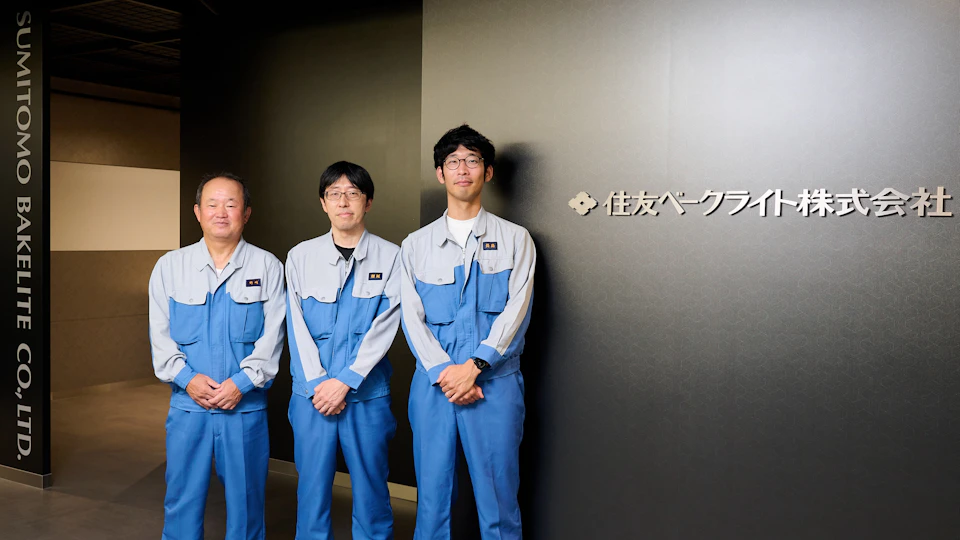
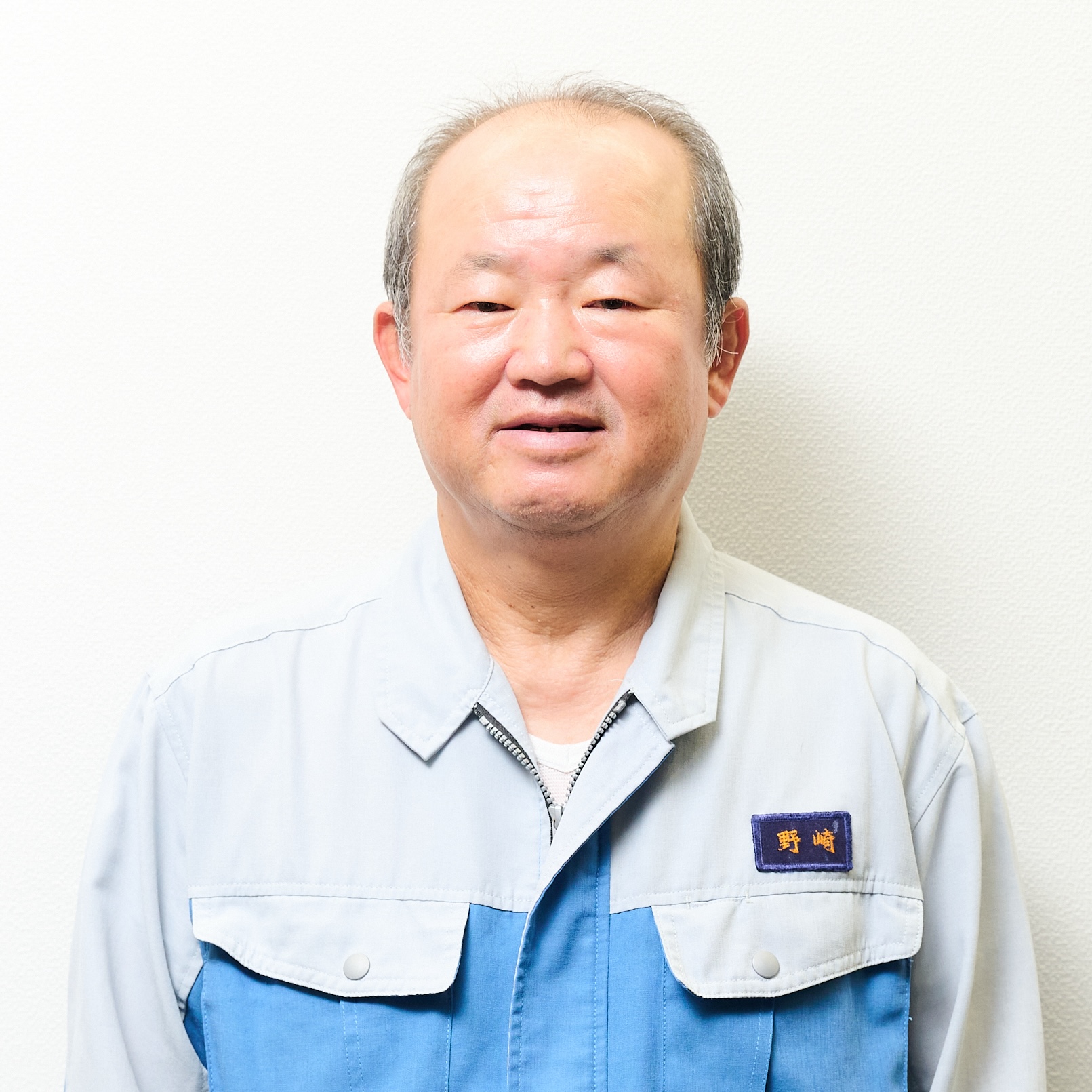
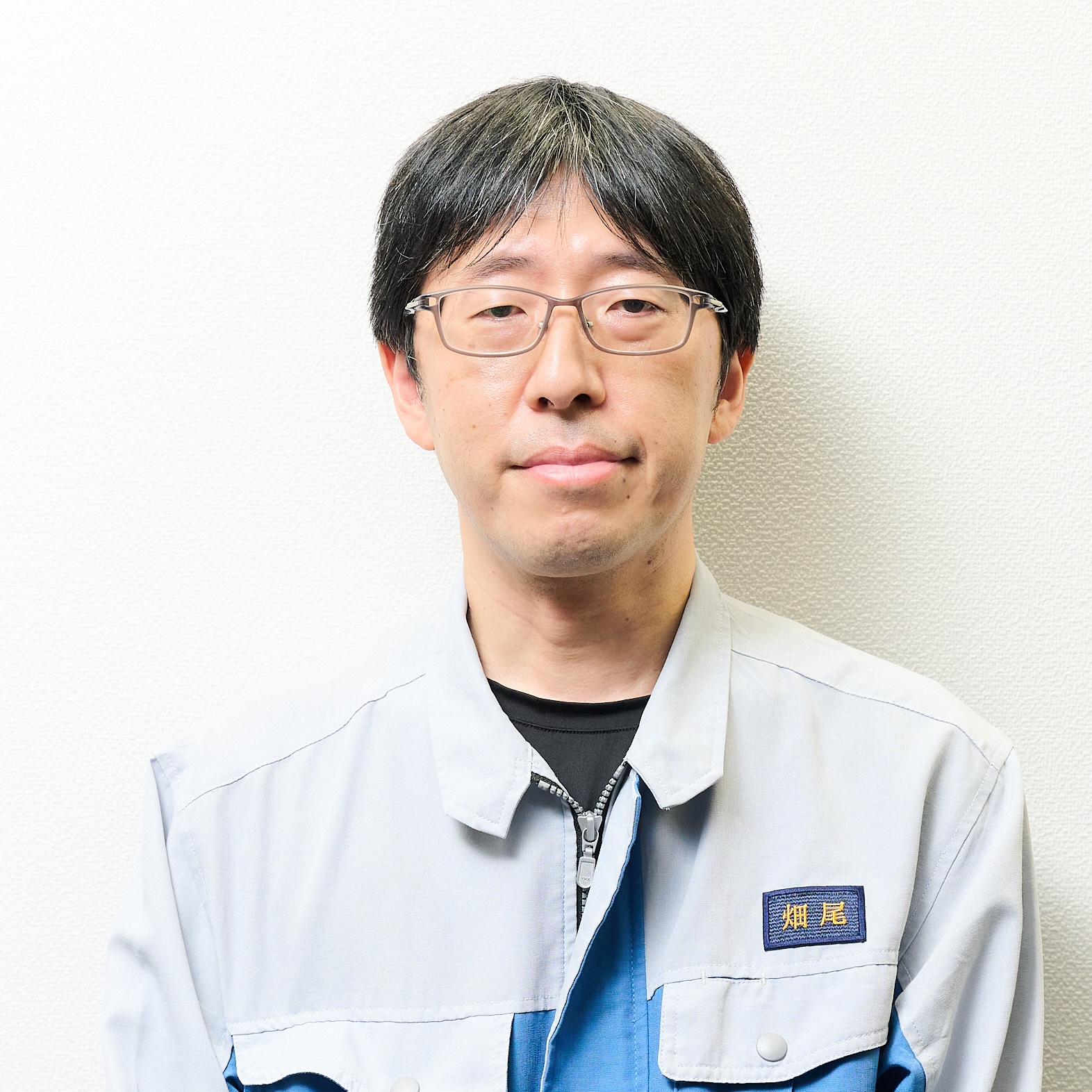
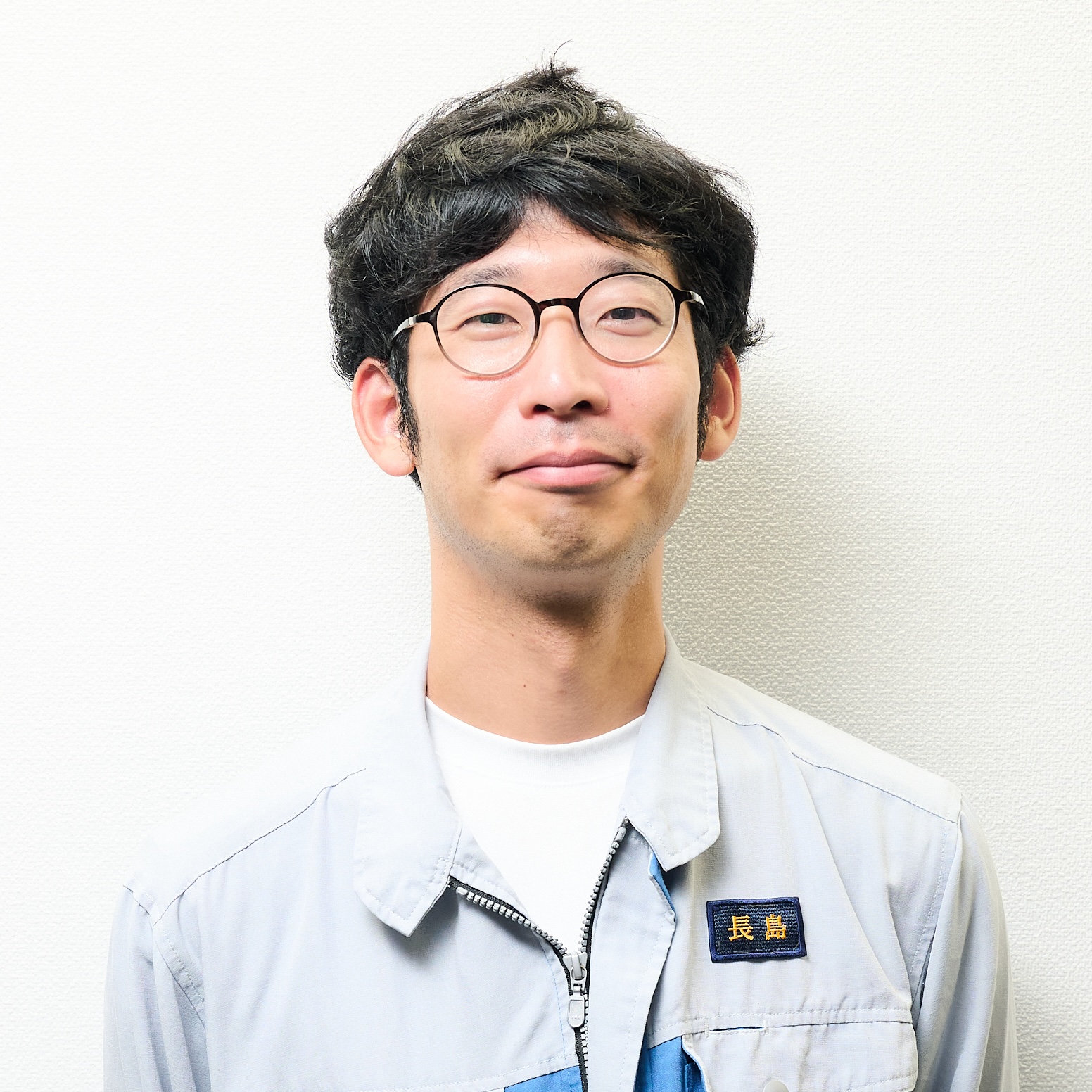
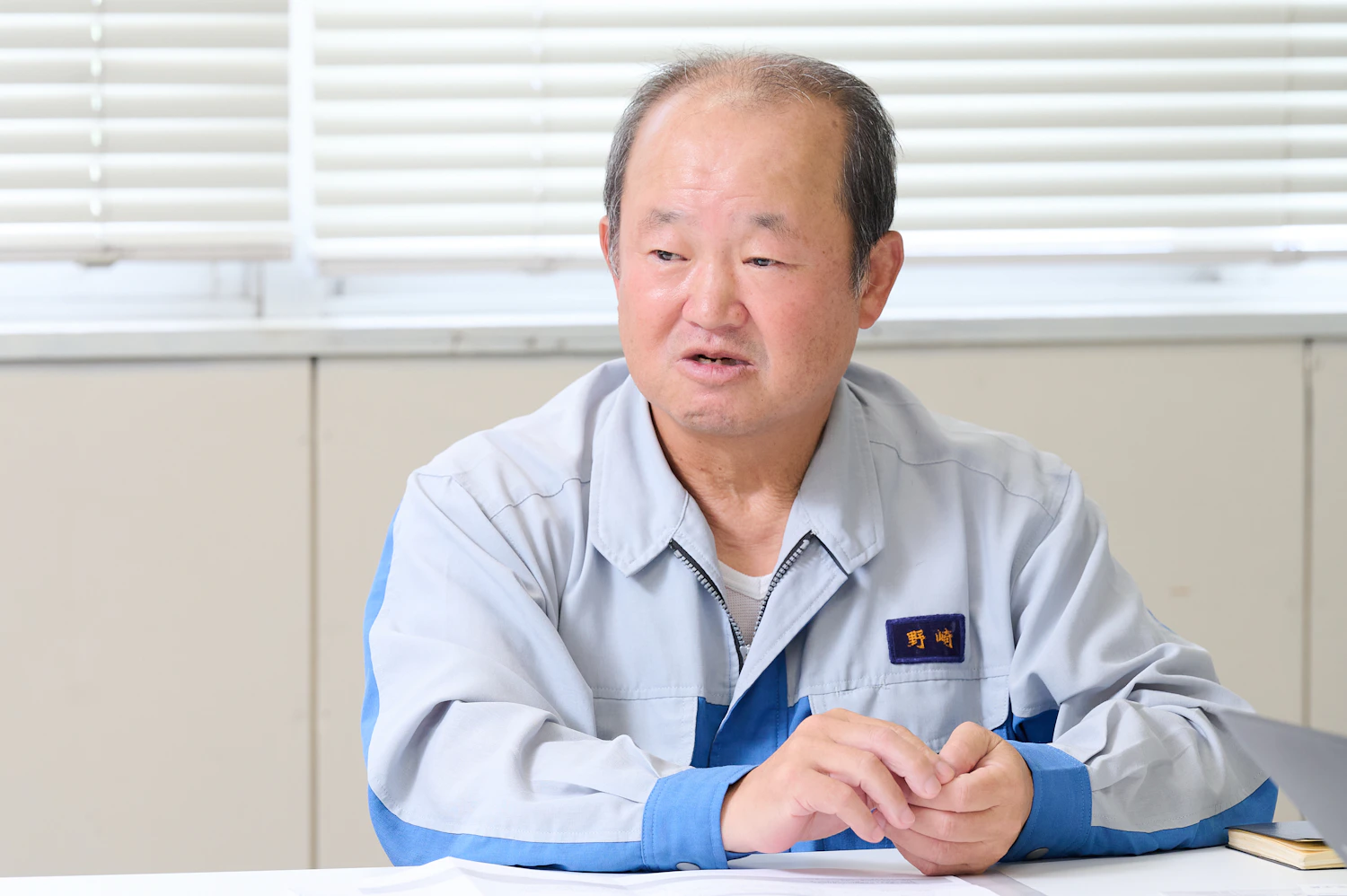
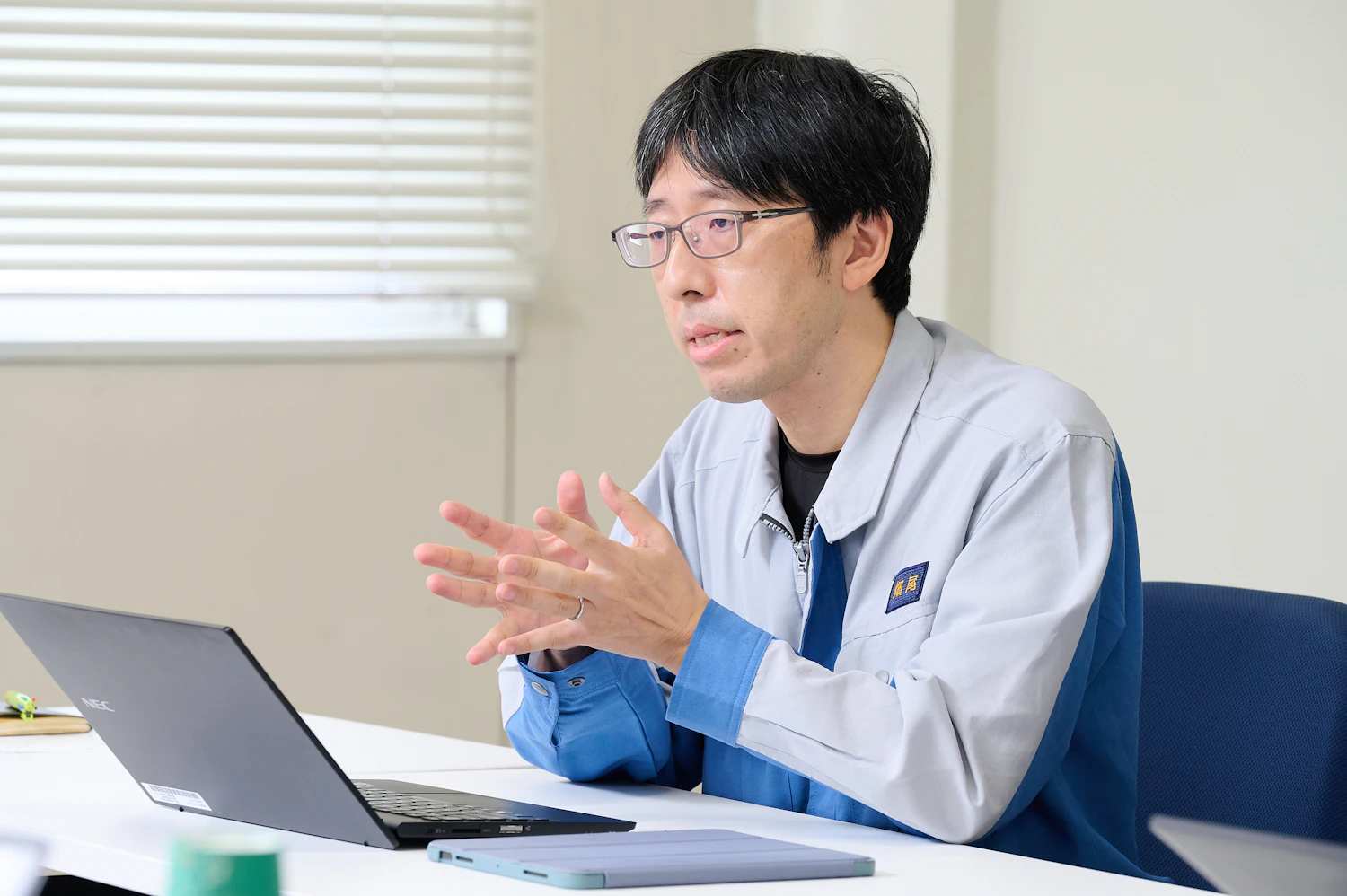
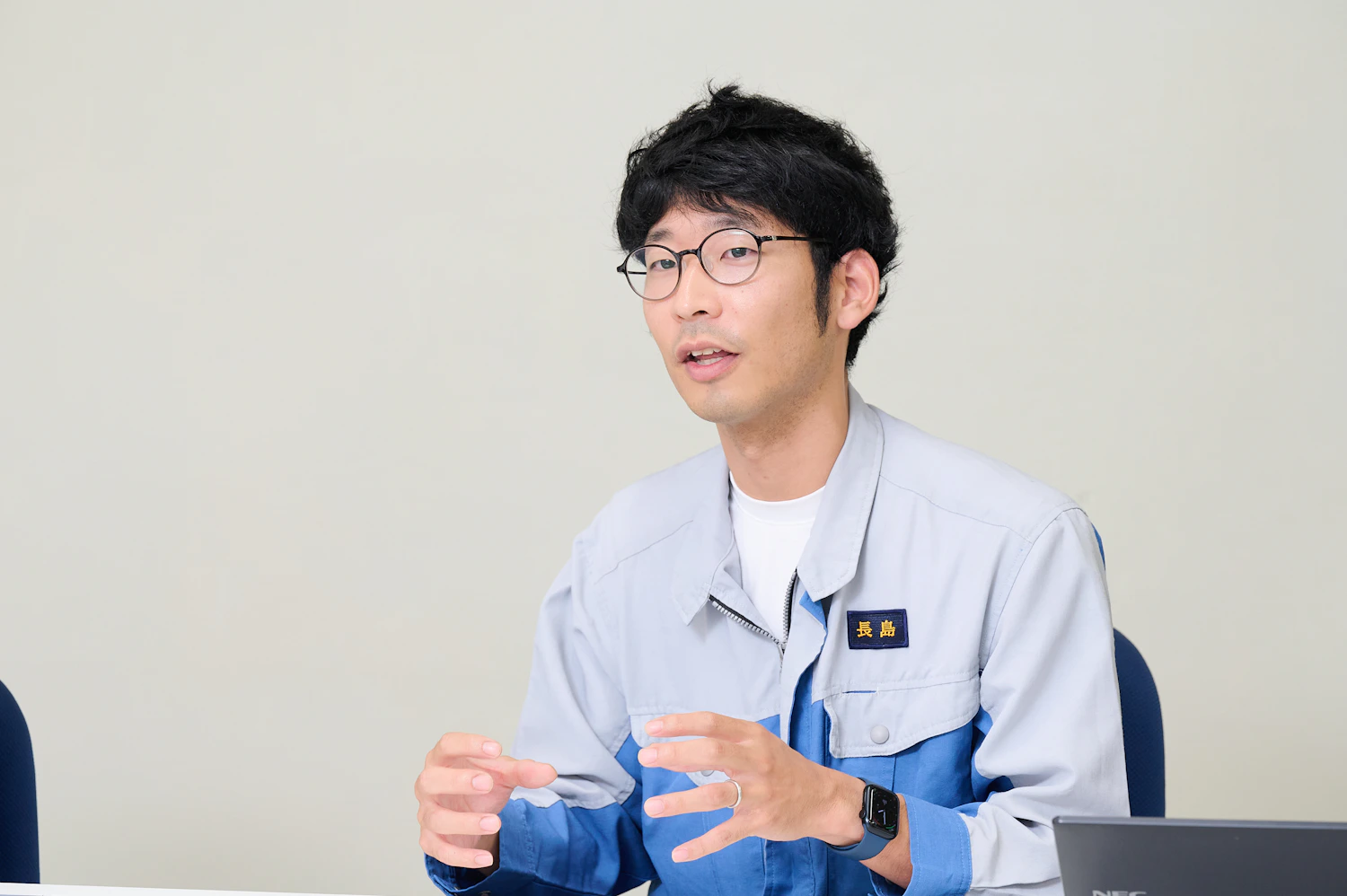
Since its founding in 1955, Sumitomo Bakelite Co., Ltd. has served as a "pioneer in plastics," supplying products across a broad range of fields, including semiconductor-related materials, metal-replacement automotive parts, and medical devices. Through a steady stream of new technology, the company has contributed to industrial progress in Japan and worldwide. Its Corporate Engineering Center, which drives the adoption of solutions across both existing and new businesses, began evaluating Materials Informatics (MI) in 2020 and adopted miHub® in 2021. We spoke with Ryuji Nozaki, General Manager of the Corporate Engineering Center and Managing Executive Officer; Takuya Hatao, General Manager of the MI Promotion Department; and Dai Nagashima, Chief Specialist in the same department, about the background to that decision and their outlook for the future.
Could you tell us about the main role of the Corporate Engineering Center?
The mission of the Corporate Engineering Center is to safeguard people, materials, and quality, and to secure profitability, so that the company can continue to grow over the long term. To do that, we grasp social, market, and customer needs, and we work from the knowledge and know-how we gather to clarify the underlying mechanisms based on hard facts. On that basis, we deliver the solutions both existing and new businesses need. In short, our role is to diagnose the issues that arise across the company and drive improvement.
The Center has also taken the lead on our manufacturing digital transformation (DX), with the goal of improving labor productivity. The backdrop is the increasingly serious labor shortage on the factory floor as Japan's working-age population shrinks. At the same time, with veteran engineers ageing out, it has become urgent to pass on their skills, experience, and know-how, and to use ICT to retain that knowledge as a corporate asset. Driving operational change through digital technology is a pressing need, and so we moved early to advance manufacturing DX across the company.
So it's effectively a cross-functional, company-wide unit.
That's right. Broadly, we operate in three business areas: semiconductor materials, high-performance plastics, and quality-of-life products. Our manufacturing and development sites are spread out, but the underlying process, evaluation, and manufacturing technologies have a great deal in common. Our department is where we consolidate these core technologies, advance them, and apply them to solve problems for each of the R&D and manufacturing units.
Senior Management Backed a Long-Term View Over Short-Term ROI
Could you tell us what led you to adopt miHub®?
I originally handled simulation-based evaluation in a different department. But I came to feel that simulation alone wasn't enough — we needed to understand what mechanism was producing a given phenomenon and which material was the right fit. We had to look hard at the experimental data, pin down the root cause, and only then select the material. Going through that process is what gave me a strong conviction that we needed MI.
Ideally, materials development would track the simulations, but in the real world it isn't that simple, and that was frustrating. I felt that with data science we could move from "it might work this way" to "this is what will work," and commit to results with much greater confidence. I'd been watching MI for some time and saw it as a meaningful way to improve both the precision and the efficiency of materials development.
Senior management had a clear picture of using AI to analyze the causes of defective parts on the production line and then selecting the appropriate material based on the results. The proposal Hatao, Nagashima, and others brought forward — to bring MI into the R&D labs — fitted neatly with that vision. So senior management already had a working understanding of MI from the very start.
Another piece of context is that DX in R&D was a natural extension of our manufacturing DX work. On the main production lines of our flagship domestic plant, digitalization lifted production efficiency by 20%. But manufacturing doesn't start on the factory floor — it starts in R&D. So we needed to take on operational change at the R&D stage as well, to push manufacturing efficiency further still.
We set ourselves the goal of strengthening our product development capability, and concluded that getting there meant adding a data-driven approach on top of our conventional development methods.
Compared with manufacturing DX, it seems harder to define ROI criteria for MI. How did senior management view things when you proposed adoption?
From the moment we put the proposal forward, senior management didn't insist on rigorous ROI numbers. They backed the project on a medium- to long-term view, with the goal of establishing a data-driven development capability.
When we made the case, we didn't need to start with "here's what MI is." The shared understanding that "yes, this is something we need" was already in place.
Our senior management keeps close track of what Japanese industry, and the chemicals sector in particular, needs at any given moment. They already recognized that MI was essential, and I think that's why the internal approval process moved so smoothly.
Looking carefully at the company's future, we became convinced that MI was the technology we needed to maintain and strengthen our competitiveness. That conviction is what made it possible to commit to adopting it.
Data-Driven Development Needs a Tool Every Researcher Can Use
Could you walk us through how, and why, you ended up choosing miHub®?
One key plank of our MI strategy was to embed MI into day-to-day R&D work, so the selection criterion was simple: this had to be "an MI tool researchers can actually use in their jobs." Our target state wasn't a small group of MI specialists — it was every researcher involved in product development practicing data-driven development.
The statistics and programming that underpin MI practice are notoriously hard to learn, but during the evaluation MI-6's team didn't just walk us through the software — they ran learning sessions for us, taking us from a general introduction to MI through to the specifics of miHub®. That was the point at which I felt the product would meet every one of our requirements.
Did you compare other options?
Yes, we did. We looked at more general-purpose tools, and we also considered learning to program and building something ourselves. But building it ourselves would take too long, and the general-purpose tools clearly weren't going to meet our requirements. miHub® was where our expectations were highest.
On top of that, for a team like ours, who weren't yet clear on exactly what to do or how to do it, having solid support from MI-6 — a group of MI specialists — was reassuring and frankly a major draw.
From Working Group to Dedicated MI Department
We understand that when you first selected miHub®, this wasn't yet the MI Promotion Department but a working group.
We began as a working group of volunteers from each of our research laboratories, with two aims: to test whether MI was effective for us, and to identify the right MI techniques and rollout strategy for the company as a whole and for each lab.
The working group then grew into a project team. Its aim was to root MI inside the company, and it began building an in-house R&D data platform. Two things drove the move from working group to project team: we had been able to demonstrate that MI worked, and we had recognized that without a permanent system for accumulating data we couldn't go any further. Accumulating data wasn't enough on its own, though, so we organized the work around three pillars: data accumulation, generating results by putting that data to use, and — over the longer term — developing specialist talent.
We spent two years building out the data platform. This fiscal year, the data-accumulation system reached a level where each lab could use it on its own, so the project team was wound up and the MI Promotion Department was created in its place. Its aim is to keep supporting the DX work each lab is now driving independently, and to push ahead with adopting and applying more advanced MI techniques.
What was the hardest part of operating as a working group?
To keep the MI initiative on course, we needed the leads at each lab to articulate their own vision of "this is what our R&D ought to look like." Building that alignment at the outset, across labs with different strategies and circumstances, was difficult.
The experience showed me that people leading MI initiatives need project management skills as well as data science expertise. Without both, you can't really embed MI in the development organization. As a cross-functional unit we connect the labs with senior management and drive alignment, so the project manager's ability to bridge the top and the bottom of the organization is essential.
Driving internal adoption before clear results were visible must have been a real challenge.
To get a wide range of stakeholders on board, you have to keep showing them results — big or small. miHub® will tell you "what to do next" even when you have very little data, so it was relatively easy to get started. The catch is that it's a tool that demands operational change directly: without the flexibility to rework your conventional experiment-planning process, parts of it are hard to adopt. This isn't unique to miHub® — it's an unavoidable issue with introducing MI of any kind.
Many researchers have their own way of reasoning from knowledge and experience and of choosing experimental conditions. So when we brought in a new method, it was important to explain the value of MI carefully and give them time to understand it. In fact, because formal training in experiment planning is patchy, some of the experiments being run weren't particularly efficient. Once we explained things using data, people understood, and changing the conventional experiment-planning process itself didn't turn out to be a major barrier.
miHub® Significantly Streamlined Multi-Property Tuning That Used to Mean Constant Rework
What outcomes have you seen since adopting miHub®?
We work extensively with resin composite materials. We've been able to use miHub® and produce results at each stage of the R&D process — initial screening,optimizing trade-off properties, and prototype evaluation. Let me walk through three concrete results, one from each stage.
The first is from initial screening. We narrowed the candidate experiments from 96 to 26, cutting development effort in half — a saving of 420 hours in concrete terms. By adding miHub®'s analytical results — that is, data-based judgement — on top of experience and intuition, we've been able to apply the same kind of narrowing across a range of research themes.
The second is a case of optimizing multiple properties that trade off against each other. Working with Bayesian Optimization in particular allowed us to develop efficiently, and we were able to find a performance level that the researchers found to be optimal for the trade-off characteristics.
The third is from prototype evaluation. By narrowing the prototype set we reduced the number of prototypes runs from eight to two, with significant cuts to both prototyping time and the effort needed to evaluate samples. We made better use of the research data we had built up going into the prototype stage than we ever had before.
With the more familiar one-factor-at-a-time experiments and per-property condition tuning, you'd often have to backtrack when adjusting multiple properties, and the project as a whole would slip. Adopting miHub® — a multi-objective Bayesian Optimization tool built for materials work — streamlined that process significantly and shortened development timelines. Beyond the numbers, the qualitative outcome mattered just as much: these concrete results built a sense, internally, that with MI "things that weren't possible before now are."
With product lifecycles getting shorter, shortening development time has been particularly impactful for us. As overseas materials makers gain ground, we feel acutely the need to move quickly.
Some companies we speak with struggle when they try to take MI from one lab to others. Your approach looks like you brought a lot of people in early. What was the thinking behind that?
At the project-team stage we went back and forth on whether to involve all the labs across the company from day one, or to focus intensively on a single department. In the end, because the work would touch every lab anyway, we chose the company-wide approach. Looking back, the two things that made it work were faster information sharing across the company and the way the sites naturally pushed each other to do better.
I think the reason the focused, single-department approach fails to scale horizontally is that you can find unlimited differences to argue about. "Our lab works with different materials," "our products are different from theirs," "our research process is different" — it's all too easy to find reasons not to do something. But if you want to get ahead of the competition, you have to find reasons to do it, not reasons not to. It was hard at times, but in hindsight the company-wide approach was clearly the right call.
Aiming for an Organization Where Researchers Use MI on Their Own
What stands out about the support you've had from MI-6?
Most general-purpose data analytics vendors know machine learning well, but when it comes to applying it to materials development, you're largely on your own. The MI-6 team, by contrast, understood MI itself deeply — both the data science and the materials side — and that was hugely reassuring. They also pitched in on our internal lectures and training, helping us spread the message that "MI is just a standard part of how we work now," which we really appreciated.
This isn't direct support per se, but I heard that MI-6 has data scientists in-house who actually use MI in joint development work with customers, and then feed that knowledge back into miHub®'s development. The fact that they're also pushing forward on their own initiatives looking to the future of MI — robotics for autonomous experimentation, for instance — gave us both confidence and a sense of where things are headed.
I wasn't dealing with the MI-6 team directly myself, but Hatao and Nagashima had a great deal of trust in them, and that certainly made the approval easier on my end.
How do you plan to use miHub® going forward?
miHub® lets you develop efficiently without having to learn statistics or programming to a high level. In our earlier data analysis work, researchers had to spend a lot of time going back and forth with data analysts; with miHub®, for problems where Bayesian Optimization is the right fit, researchers can now run the analysis themselves. Each lab is using it today, and we'd like it to become a tool that more and more researchers reach for as a matter of course. With the right division of labor in place, each lab can sustain a steady stream of results, and our department can focus on bringing in the more advanced techniques needed for the harder problems.
As the MI Promotion Department, we need to keep introducing new techniques and putting them into practice internally, and at the same time sustain the MI capability we've spread to each lab and put it on solid footing. We'd like MI-6 to keep supporting us on both fronts: keeping us current with leading-edge MI techniques and helping each organization build durable capability. The aim is an environment where researchers use data analysis techniques as a matter of course.
To keep generating results with miHub®, the MI Promotion Department needs to keep leading from the front. Across the company we also plan to grow our pool of data scientists, and senior data scientists above them, and place them in each lab. As we do this, we want to surface more cases where miHub® and other tools have produced clear results and contributed to research, build the sense internally that "we can do even more," and use that momentum to push the initiative further still.
Thank you very much to the team at Sumitomo Bakelite Co., Ltd. for generously sharing their time and insights.
*Note: The content of this interview is current as of August 9, 2024.
You can download more details about miHub®, our SaaS-based Design of Experiments (DoE) platform, for free from the link below.
Click here to request information on miHub®
For any other inquiries regarding Materials Informatics (MI), please feel free to contact us at the email address below.
Business Development Department, MI-6 Ltd. bd@mi-6.co.jp