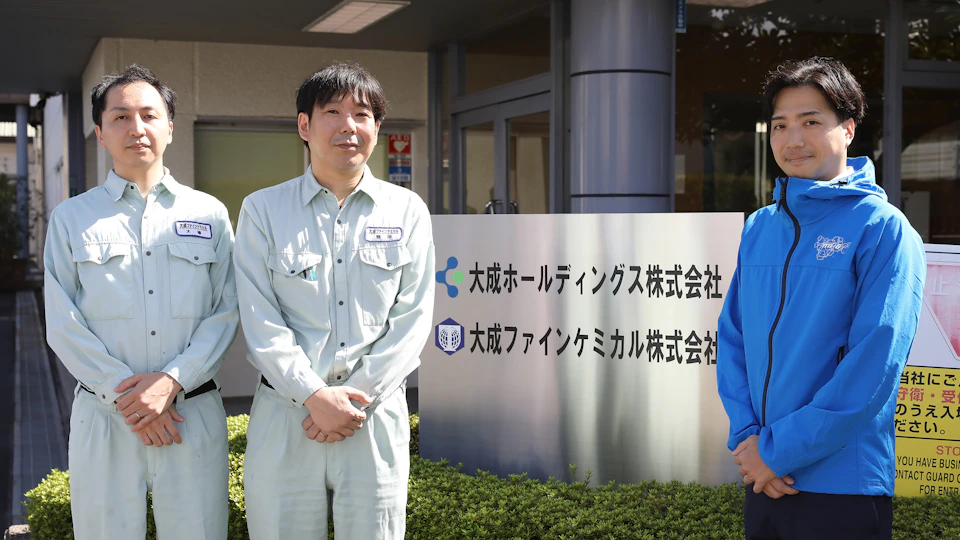
Taisei Fine Chemical Co., Ltd. handles development, manufacturing, and sales across a broad range of products, including acrylic resins, special functional coating agents, and pigment dispersions. Drawing on chemical expertise cultivated over a history spanning more than 100 years, the company responds flexibly and rapidly to demanding customer requirements. It also helps customers solve problems by creating new value through innovation.
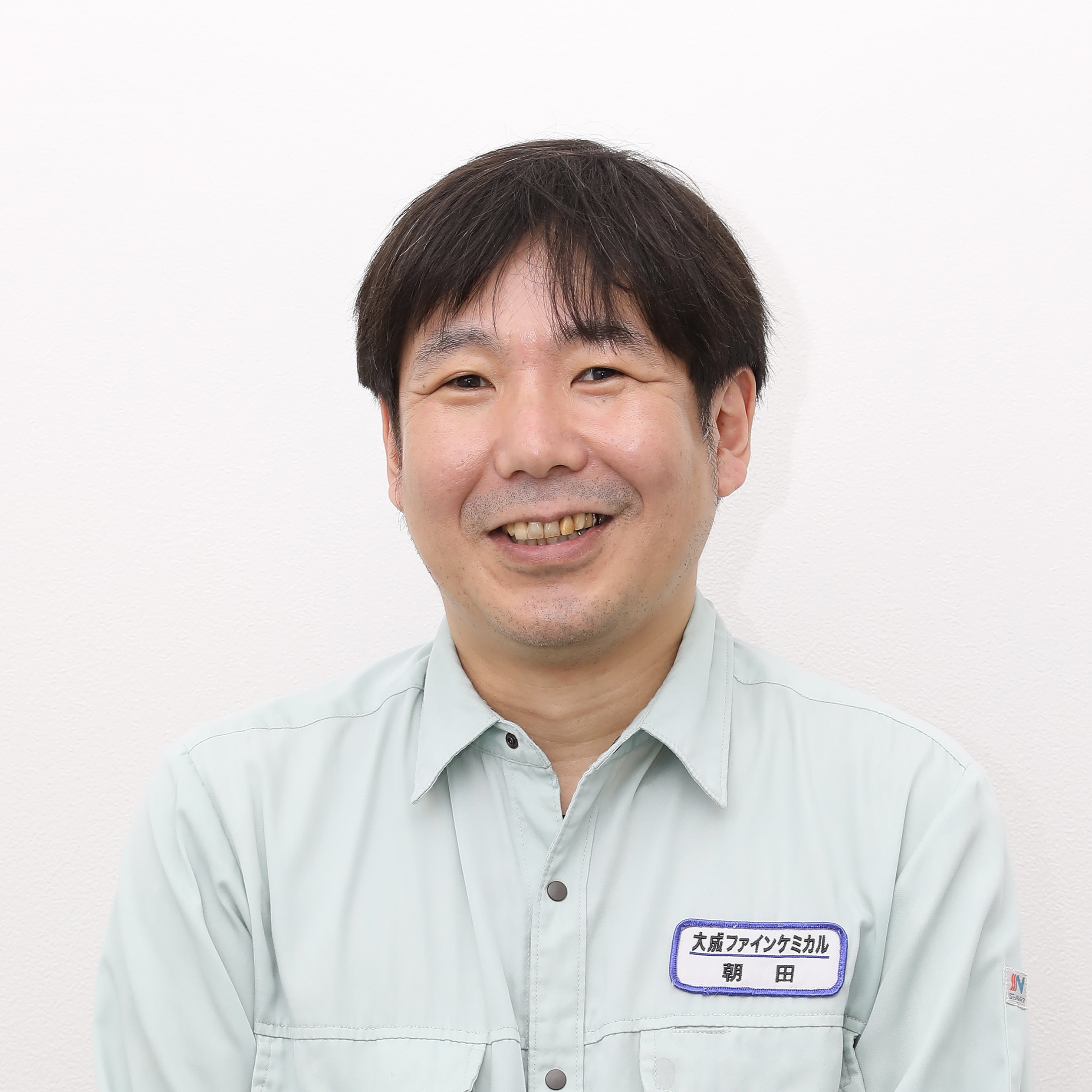
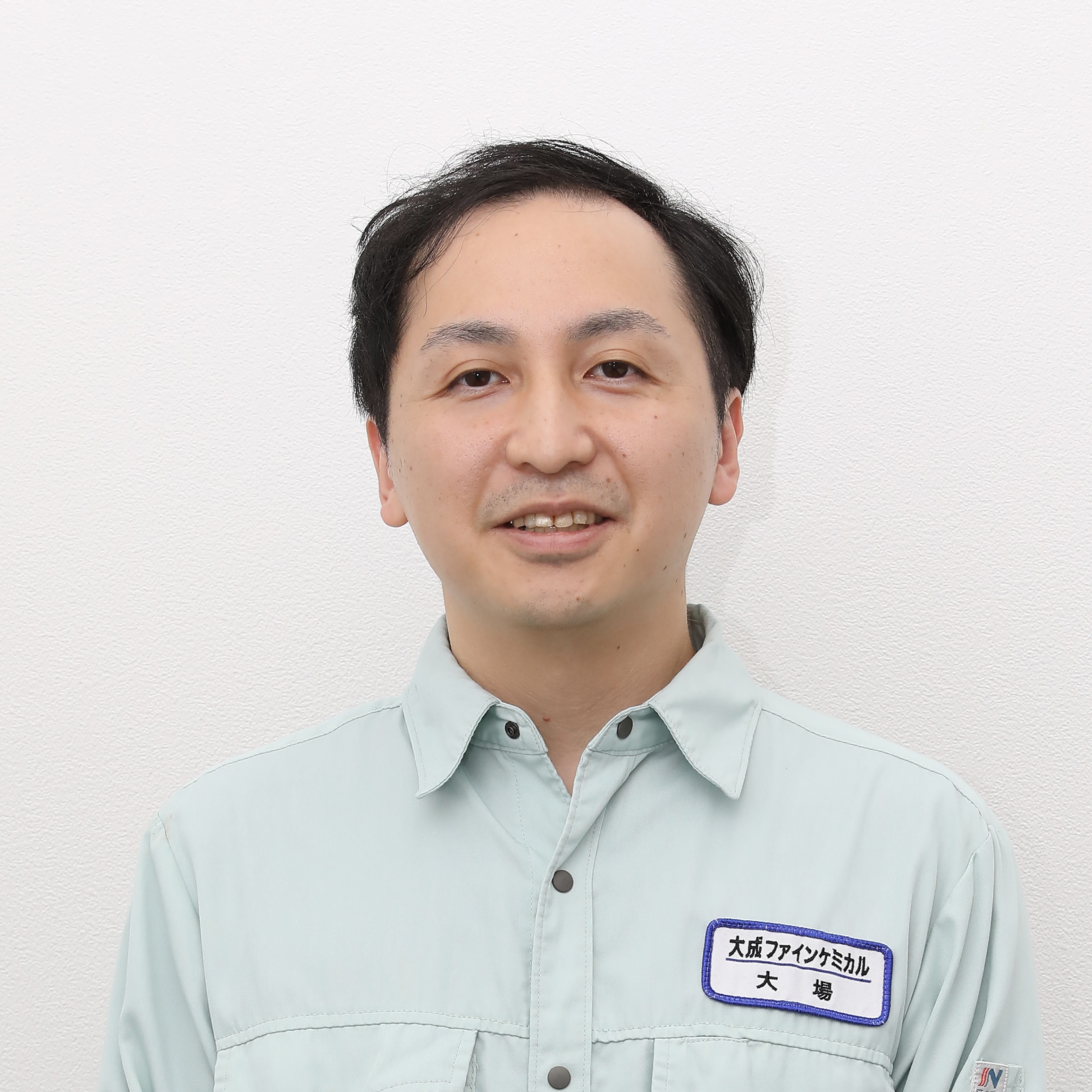
The company began considering materials informatics (MI) around 2024 and introduced miHub that same year. In 2026, it also held a workshop for its researchers. We spoke with Yasuhiro Asada, Group Leader of the Technical Group in the Resin Division, and Yuki Oba, a senior staff member in the group, about their efforts to use MI and embed it across the organisation.
Exploring new approaches to R&D to meet increasingly demanding market requirements
Could you start by giving us an overview of your business?
Taisei Fine Chemical is a chemical manufacturer that supports industry through materials, drawing on three core technologies: resin synthesis, dispersion, and coating formulation. The Resin Division, where I work, primarily develops and manufactures acrylic resins. We supply resins for a wide range of applications, including inks, paints, building materials, and electronic materials. Our business centres on commissioned development, offering a wide variety of products in small volumes to meet customers’ specific needs.
Does your approach to R&D differ between commissioned projects and your own development projects?
Yes, considerably. In commissioned projects, the main priority is how quickly we can scale up. We need to meet target values within constraints such as customer-specified raw materials, then move quickly and reliably into mass production.
By contrast, our own development projects start without a clear picture of the finished product. We define the concept ourselves and work towards the goal from scratch, so both the destination and the way we get there are quite different.
One of our strengths in new product development is our ability to gather information, which we have built through many years of commissioned work. These projects often come from major companies, giving us early insight into market needs. Developing new products in response to current market trends makes it easier to propose our own products to customers. That virtuous cycle is a distinctive strength of our company.
What changes were you seeing in the materials industry, and what challenges were you facing at the time?
The functions and performance the market demands have become increasingly sophisticated in recent years. Some products, such as inks and paints, remain in use for a long time. In electronic materials, however, performance requirements change from year to year, and semiconductor-related applications move particularly quickly. We cannot survive as a business unless we keep pace. That is why responding flexibly and rapidly is deeply ingrained in our culture, and we are confident in our synthesis technologies for meeting demanding requirements.
There were challenges, though. Meeting customer requests is demanding, but commissioned projects make it very clear what we need to do. Because the work is easier to anticipate, there is less psychological resistance to getting started. When we moved into the challenge of creating something new ourselves, however, we found it difficult to move beyond the mindset and methods of commissioned work.
There is also a tendency specific to the polymer industry. Add an initiator to a monomer and you get some form of polymer; add an additive to a polymer and you get a material. Because the process of making something is so straightforward, quite a few people tend to adjust material properties based on past experience and intuition. That culture existed in our department, too.
Even when starting new projects, the formulations we drew on and our approaches to achieving the required performance depended on individual researchers’ knowledge. For better or worse, we relied heavily on experience and intuition.
Knowledge and know-how are valuable assets. But more development projects now demand exceptional performance in specific areas. We were increasingly concerned that it would become difficult to keep developing products within the limits of experience-based approaches alone.
Introducing miHub so researchers can work with data themselves
How did those challenges lead you to introduce MI?
Digital transformation had been a company-wide policy for several years, and the R&D department was also looking for more efficient ways of working. The decision to introduce MI came when this top-down direction from management aligned with researchers’ desire to adopt new methods.
Our researchers’ experience and intuition had delivered many results, but we also felt that we sometimes took a roundabout route to our goals. Trial and error is valuable in R&D, but there must have been quite a few experiments we could have avoided by making better use of past data. We thought that finding patterns and correlations in the data we had accumulated, and combining those insights with researchers’ experience, could help us accelerate R&D.
When we began evaluating specific tools, some people suggested that Excel might be sufficient, given the limited volume of data we handled and its statistical analysis functions. But not everyone in the company could build formulas or use complex processing functions in Excel. We were concerned that it might simply make proficient users even more capable, creating a new dependence on particular individuals. We wanted an environment where everyone could make effective use of data analysis, rather than just a few specialists.
We placed particular emphasis on an intuitive user interface (UI), taking into account team members without specialist knowledge of statistics and the possibility of colleagues with humanities backgrounds joining us in the future. Of the options we considered, miHub was the best fit for our aim of using software to share knowledge across the organisation.
What specifically made you choose miHub?
The deciding factors were the price and how well it suited our approach to development. We are R&D specialists, not data analysis specialists. It was therefore important that researchers could organise formulation conditions and experimental results as data, and analyse them themselves alongside their day-to-day experiments.
From the researchers’ perspective, the clear UI, which lets you select buttons intuitively and work through the process, was a major advantage. We could carry out tasks such as data visualisation and correlation analysis, which would otherwise be complex, without specialist knowledge of statistics or programming. It offered the ease of use we were looking for.
It was a tool that could do what we wanted. When we discussed its introduction with the executives, everyone agreed on adopting it without hesitation.
What did you focus on when you first introduced it?
In the initial phase, the priority is to embed it in everyday practice across the organisation. We focused on whether researchers understood its importance and would continue to use it. Our aim was for the team to communicate throughout the process, from building a shared understanding of miHub’s value and why we were using it to validating the results.
We felt that getting researchers involved would be the biggest hurdle, so we focused on internal adoption. We continued activities such as presenting our results at company-wide R&D reporting meetings. In 2026, our third year of using miHub, we held a participatory workshop for development team members. We are continuing our efforts to help everyone, from early-career researchers to experienced colleagues, understand the fundamentals of MI and use it actively in their work.
MI delivers tangible results with 43% fewer prototypes and a nine-month reduction in development time
How did you progress from establishing adoption to achieving results, and what specific results have you seen?
Introducing miHub did not immediately lead to a dramatic reduction in development time. As I mentioned earlier, our initial measure of success was whether researchers could set objectives, select explanatory variables, and put the approach into practice while discussing the validity of the results within the team. As we worked through this process by trial and error, people began saying, ‘I’d like to try it myself’, or sharing the results they had achieved. This created a virtuous cycle: other team members became interested in MI and miHub and started coming to us to learn more.
Adoption was still limited in the first year. We focused on raising awareness by consistently presenting examples of MI’s practical value at company-wide research reporting meetings and similar events. Attitudes began to change significantly around the end of the second year.
Now, in 2026, our third year, we have achieved clear, quantifiable results in the development of biomass-based acrylic resins. We moved beyond repeatedly making prototypes based on experience and intuition. By analysing conditions and results in miHub, we were able to identify promising regions of formulation space early on. Specifically, we needed only around 20 prototypes, compared with around 35 before introducing MI – a reduction of approximately 43%. We also reduced the number of cycles from prototyping through evaluation from eight to five, a decrease of 38%. As a result, we shortened development time by nine months, from 27 months to 18 months.
Having led the introduction myself, I was relieved to see our efforts produce such tangible results.
Were there any hurdles to extending adoption across the organisation?
Breaking established assumptions. The belief that making more prototypes is inherently better remains deeply rooted in chemistry, and not everyone was positive about using MI from the outset. We steadily worked to build understanding across the organisation, explaining that continuing along the same path would not open up new possibilities for the future.
To overcome that psychological barrier, we first focused on creating small successes in projects with plenty of existing data. For example, analysis of emulsion polymerisation clearly showed how stirring speed affected particle size, allowing us to substantiate experience-based knowledge with data. To help close the gaps in individuals’ analytical skills, we also shared examples from actual projects and created an environment where team members could learn from one another.
We have now entered the next phase: expanding the user base. To make the tool an established part of our work, researchers need to practise organising and analysing data in their day-to-day activities and develop a thorough understanding of how to do so. That is why I believe it is essential to keep building small successes through dialogue with each researcher.
What reactions have you seen from other divisions, and what challenges remain?
Some seem to feel that it looks like a lot of work. The question of whether they need to prepare all their data at the outset appears to be a psychological barrier. They are impressed by the results of earlier projects, but when it comes to trying it themselves, they hesitate because they do not know where to start. Lowering that barrier is a challenge we need to address.
When we look at projects in other divisions, we often see areas where MI could help improve things. As colleagues in the same company, we want to create an environment where researchers who become interested in trying analysis can get started smoothly.
How have you found MI-6’s support?
We see MI-6 as a partner in advancing digital transformation in R&D. When we struggled with how to make data use part of our organisational culture, they went beyond explaining how to use the tool and offered practical suggestions that addressed our organisational challenges. The participatory workshop for development team members came about through a proposal from MI-6. Their support extends well beyond introducing a tool, with training and regular analysis meetings, among other activities.
At last week’s meeting, for example, two early-career team members explained their projects and goals in their own words and discussed them directly with an MI-6 data scientist. It was very rewarding to see their clear progress, as well as the tool becoming embedded in our work.
miHub is one means of advancing digital transformation. What matters even more than introducing it is building a way of working that is right for our company. We see the essence of digital transformation as establishing how the whole organisation will put it into practice. Recently, researchers have begun volunteering ideas about things they would like to try. By picking up on those ideas, we feel that we are co-creating our ideal way of working with MI-6.
Building the foundations and organisational framework for data-driven R&D
What are your plans for the future, and what do you expect from MI-6?
To connect the functions customers need with material properties, we need a database that allows us to compare and evaluate different projects against common criteria. From the outset, we have worked with the aim of building this master data foundation. As we expand the use of MI, we expect to encounter a lack of historical data when starting new projects. To make it possible to use data from different projects, we began standardising analysis items and how we record experimental conditions around six months ago, and have been accumulating data accordingly. We now want to establish a foundation for accessing and analysing those data across projects, helping us launch new research projects and develop products using insights from past work.
Our immediate goal is to create an environment where more team members can use miHub routinely. Following an increase in the number of analysis accounts, we plan to expand access further from the next financial year onwards. We want to establish a data-driven R&D framework in which each person develops hypotheses and makes decisions based on data, and knowledge is shared across the organisation. This will help us further shorten development time and improve productivity.
Beyond that, we want to contribute to the company’s business portfolio. By combining the Resin Division’s strengths with digital transformation in R&D, we hope to create a new pillar of business that will drive further growth for the company. We would find it reassuring to have MI-6 continue to support us as we take on these challenges.
Finally, what would you say to companies considering introducing MI?
Our Resin Division has around 85 employees, of whom about 10 work in development. MI is often seen as something for large companies. In our experience, however, it can be a particularly effective option for small and medium-sized manufacturers that need to strengthen their competitiveness with limited resources. We began by feeling our way, but a series of small successes led to shorter development times and new insights. We now want to help drive MI adoption across the company, including other divisions, and contribute to business growth throughout the organisation.
We will continue to pursue data-driven R&D by combining researchers’ experience with data. We hope our efforts can serve as a useful example for companies beginning to use MI or seeking to embed it across their organisations.
Thank you very much to the team at Taisei Fine Chemical for generously sharing their time and insights.
*Note: The content of this interview is current as of September 14, 2026.
You can read another article about the workshop here.
You can download more details about miHub®, our SaaS-based Design of Experiments (DoE) platform, for free from the link below.
Click here to request information on miHub®
For any other inquiries regarding Materials Informatics (MI), please feel free to contact us at the email address below.
Business Development Department, MI-6 Ltd. bd@mi-6.co.jp